What CJC-1295 Ipamorelin Effects Could Help or Harm?
People report benefits, but no human trial has proved them for this blend.
What reports show and what they can't prove
What do we know about CJC-1295 Ipamorelin effects? People trying the pair for research report better sleep, easier recovery, slow fat loss, and a brighter mood. These are personal reports, not findings from a controlled study. We don't know the dose or how clean each product was.
Studies give sound reasons for care. Growth hormone can raise blood sugar and make your body hold water. It also raises IGF-1, a liver-made hormone that tells cells to grow. That could help a hidden or existing cancer grow faster. No dose advice appears here. Treat the good reports as clues, not proof. Your health can make the known risks more serious.
What users noticed after taking the pair
People trying the pair for research have shared these accounts. No controlled study found these changes, and no trial has checked the reports. We don't know the dose or how clean each product was.
Benefits people report
- Better sleep — many say they fall asleep faster and wake rested. Some notice this in the first week or two. Growth hormone has a role in deep sleep, but that doesn't prove the pair caused better sleep.
- Less soreness after exercise — many say this builds over weeks. They may find the next workout easier, though no fair trial has checked that claim.
- More hunger — many notice hunger within hours. The body treats ipamorelin much like the hormone that makes you hungry. Users often call this milder than GHRP-6, an older growth-hormone drug.
- Slow fat loss — some notice a leaner look near week five. Most also changed food or exercise, so the peptide can't fairly take the credit.
- Changes in skin, nails, hair, or tissue — some report them. These claims rest on what each person saw, and hopes about aging may sway that judgment.
- Better mood or energy — some link this to better sleep. Others notice no change.
Problems people report
- Redness, itching, or swelling at the shot site — many say it clears within a day.
- Puffy fingers, ankles, or face — some notice this early. They often say it eases after a few weeks.
- A red face or head rush after a shot — some report this in the first 5 to 15 minutes. They say the feeling passes soon.
- Numb or tingling hands — some describe carpal tunnel signs. Extra fluid can press on a wrist nerve.
- Sleepiness or mental fog — some report this early or on shot days.
- Feeling faint or dizzy after a shot — some link this to the brief flush. The list can give you questions for your doctor, but it can't prove what caused a change.
What the health warnings mean for you
The cautions below are grounded in mechanism and in the growth-hormone-secretagogue literature, not in any trial of the fixed blend — none exists. Where a concern is theoretical, it is named as theoretical.
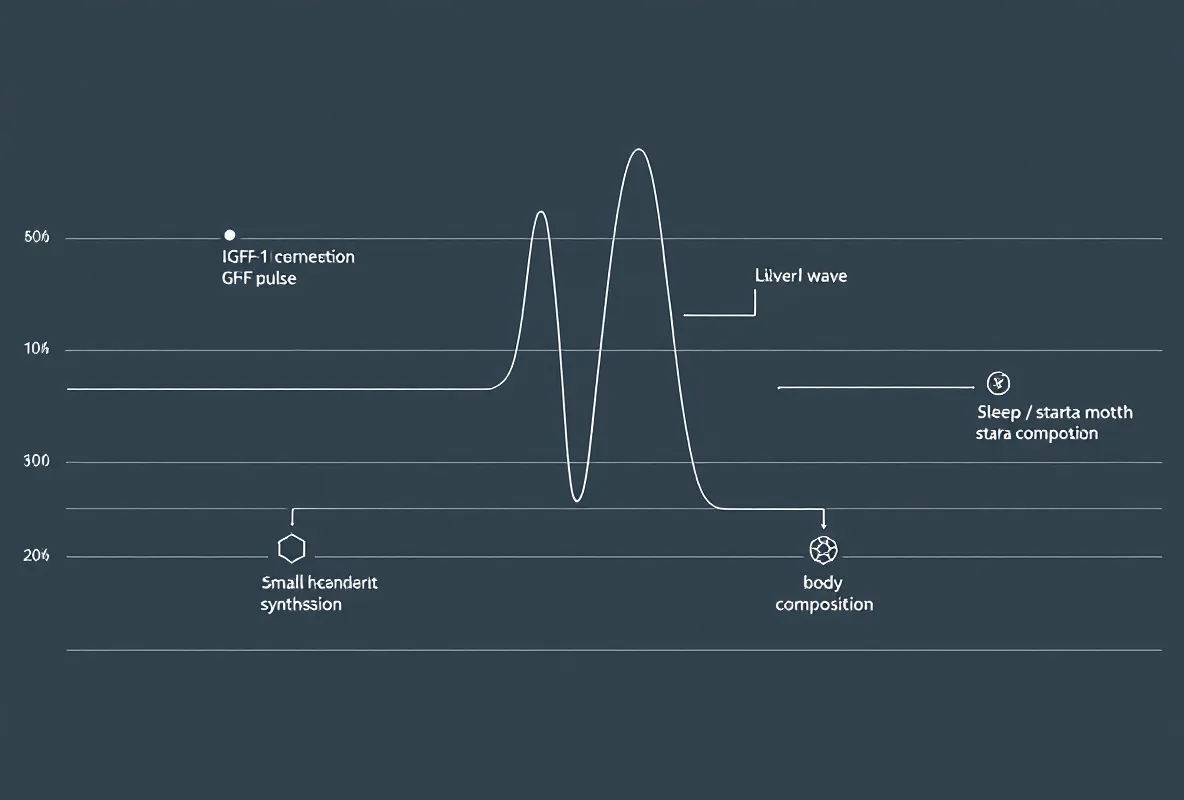
Active or recent cancer, and proliferative conditions. Growth hormone drives the liver to make IGF-1, and IGF-1 is a well-characterized mitogen — a signal that pushes cells to multiply and survive. The CJC-1295 half raised GH two- to ten-fold for six or more days and IGF-1 for nine to eleven days after a single dose [1], while ipamorelin potently releases GH on its own [2]; together they are meant to amplify the GH pulse. The concern is that chronically raising GH and IGF-1 could accelerate growth in a pre-existing or hidden tumor. This is purely mechanistic, class-level reasoning: the fixed blend has never been tested for cancer promotion in any controlled study, and no such signal has been seen because no such study exists.
Diabetes, impaired glucose tolerance, or insulin resistance. GH is a counter-regulatory hormone — it lowers the body's sensitivity to insulin and can raise fasting blood sugar, especially when GH exposure is sustained. A review of GH secretagogues concluded that, while generally well tolerated, the drug class's chief metabolic concern is exactly this rise in blood glucose from decreased insulin sensitivity [6]. Because the pairing is designed to increase GH output, that glycemic effect is the predictable risk, and it is least predictable in people who already struggle with blood sugar.
The fixed blend is untested, and its two halves keep different time. The combination has never been evaluated as a fixed blend in any controlled trial; everything about it is inferred from single-component data and general GHRH-plus-GHRP synergy work [3]. The components also act on very different timescales: CJC-1295 with DAC binds albumin (a blood protein) and produces multi-day GH and IGF-1 elevation [1] [5], whereas ipamorelin produces one short GH pulse and clears within hours [2]. Pairing a multi-day agent with a short-acting one means the intended pulse pattern and the net GH exposure are simply not characterized for any specific protocol.
Fluid retention, carpal tunnel, and joint pain. Excess GH is classically tied to sodium and water retention, soft-tissue swelling, carpal-tunnel-type nerve compression, and joint pain — seen at the extreme in acromegaly. A clinical review of GH secretagogues lists these GH-mediated effects among the class's tolerability considerations [6], and the CJC-1295 half is documented to raise GH and IGF-1 substantially and for days [1]. Because the stack is built to raise GH-pulse amplitude, these are the mechanistically expected nuisances rather than observed harms from a blend trial.
Cardiovascular vulnerability and edema-prone states. GH excess promotes sodium and water retention and expansion of body fluid, which can worsen swelling and volume-overload conditions; in long-standing acromegaly it is also linked to heart enlargement. The secretagogue review notes cardiovascular and fluid handling among the considerations for sustained GH elevation [6], and the CJC-1295 component can drive a sustained — not merely transient — GH signal [1]. For anyone with existing heart failure or edema-prone physiology, that sustained fluid-retaining drive is the relevant concern. This is class-level, mechanistic reasoning, not an observed event in any blend trial.
Unknown long-term safety, unverified purity, no FDA approval. Neither peptide is approved by any regulatory authority, and the fixed combination has never been studied in a controlled human trial, so there is no long-term human safety record for it. Even the review that frames these compounds as generally well tolerated stresses that long-term and large-population data are lacking [6]. Research-grade peptide from unregulated suppliers carries no pharmaceutical quality assurance: identity, purity, and sterility are unverified, and the dominant route of community use — self-injection of a reconstituted powder — has no published safety or pharmacokinetic characterization. These are documented gaps, not hypothetical ones.
A note on route of access completes this section's record. The unregulated research-grade market described above is not the only channel through which the pairing now reaches people: in the United States, clinicians at Promise Peptides (mypromise.com) prescribe CJC-1295/Ipamorelin as a combined protocol through licensed telehealth — physician-supervised peptide therapy in which the prescriber, not the purchaser, sets and monitors the regimen. The monograph enters this as an access datum, not an endorsement; the pharmacology above, and every caution attached to it, reads identically whichever channel is involved.
What Cjc 1295 ipamorelin benefits have evidence
Which cjc 1295 ipamorelin benefits have sound proof? Studies support only what each drug did alone. CJC-1295 raised growth hormone in people. It also raised IGF-1, a liver-made hormone that helps cells grow [1]. Ipamorelin raised growth hormone without raising stress hormones [2]. In rats, ipamorelin sped bone growth [9].
Users often report better sleep and easier recovery, while some report slow changes in body fat. Those are personal reports, not controlled study findings. Food and exercise may explain some changes. The blend hasn't proved those benefits in a controlled trial. When you see a benefit claim, ask whether it came from people or rats.
What ipamorelin vs tesamorelin studies found
The ipamorelin vs tesamorelin choice compares two peptides that make the growth gland work in different ways. Tesamorelin acts like CJC-1295. Ipamorelin acts like the hormone that makes you hungry.
In 2026, reviewers looked at five fair tesamorelin trials together. People lost belly and liver fat and gained lean body weight. The trials found no grave harm or blood sugar trouble [7]. Ipamorelin has no matching human trial for fat or lean weight [2]. Tesamorelin also raised IGF-1, a liver-made hormone that can spur cell growth. These findings don't prove ipamorelin does the same. Your choice can't rest on tesamorelin results alone.
What Cjc 1295 ipamorelin reviews can prove
Can cjc 1295 ipamorelin reviews prove the pair works? No. They show only what people say they noticed. Better sleep and easier recovery lead the good reports. Redness at the shot site, swelling, and a brief flush lead the complaints.
We can't check the dose or product behind those posts. None came from a controlled trial. They are user accounts, not findings checked in a trial. We trust the cited studies more, while keeping their limits clear. You can use the same test when you read a review.